Reina Christman.Nursing & Global Health

Meet Reina Christman

I’m a California-licensed registered nurse and a licensed teacher in the Philippines. I’m interested in how communities can put the people closest to a patient in a position to help.

Clinical and teaching experience

Some of the nurses I taught in our burn unit in Riyadh were looking after a patient on a ventilator for the first time. As their preceptor, I had to care for the person in the bed while helping the nurse beside me notice what was changing and decide when to call for help.

Later, through the University of Geneva’s InZone program, I reviewed the work of community health workers training in African refugee camps. I did that work from Geneva, with trainees in programs connected to Diffa in Niger and Kakuma in Kenya. That experience sharpened a question I still ask: what can the person closest to the patient do, and what support do we owe them?

I’m Filipina, and I came to nursing by way of business school in Naga City. My first bachelor’s degree was in business administration, with a minor in business law. My second was in nursing. By the time I earned my Master of Science in Global Health at the University of Geneva, I had learned to bring all three fields to the same problem. A rural clinic can arrange a video consultation with a specialist. Someone still has to make sure a nurse has time to sit with the patient, that a person in distress can speak privately, and that the service will still be there when the grant runs out. Those are the questions I bring to my work as Global Health Advisor to the Global Challenges Forum Foundation.

From Geneva to rural America

A nurse can teach a family to change a burn dressing. She can also ask whether they have clean water at home. If several households give the same troubling answer, who can she bring together to do something about it? Florence Nightingale gave me words for both responsibilities. She called caring for someone who is ill sick-nursing and the work of keeping households and communities well health-nursing. That is what I mean by the return of the Lady with the Lamp.

In my 2025 thesis, I drew on Florence Nightingale’s work to propose the Nightingale Transdisciplinary Approach. An advanced practice nurse leads a local team that can provide primary care, offer psychological support and consult specialists through telemedicine. Through the Foundation I propose that the nurse convene a community health Covenant Table, where residents and the people responsible for local services can decide together which barrier to care to tackle first.

In 2023, the Philippine Journal of Nursing published my article From Nightingale to Now: Transforming Global Collaboration in Pandemics under the name Reina Mangubat. Today I’m developing a research proposal that a U.S. community could adapt and test. I want to know who gains access to primary care, who can get psychological or specialist help close to home, and what it costs to keep those services available.
What I bring to the table as a community health leader

  • Clinical judgment under pressure. When a patient’s condition changes quickly, I decide what needs attention first and tell the team what I’m seeing. When another nurse takes over, I want them to know what changed, what we’ve done and what still worries me.
  • Preparing patients and families for care at home. In burn care, the next dressing change may fall to a family member who has never done one before. My job as a nurse is to explain it clearly, give them time to practice, and make sure they know what changes to watch for and whom to call if they’re worried.
  • Coordination around a patient’s goals. For one person, recovery means getting back to work. For another, it means being comfortable enough to stay at home. I start by asking what matters to that person, then help the family, clinicians, and community partners agree on who will do what and whom the patient can call when the plan changes.
  • A wider view of access. Through the University of Geneva’s InZone program, I reviewed the work of community health workers training in African refugee camps. That experience informs the question I bring to rural primary care: who is already close enough to help, and how can we put clinical advice, psychological support, or a specialist consultation within reach?
  • The ability to turn an idea into a workable service. My first bachelor’s degree was in business administration, with a minor in business law. Nursing and a Master of Science in Global Health followed. As Global Health Advisor to the Global Challenges Forum Foundation, I draw on all three when I ask who can make a decision, what it will cost, and whether a community will still have the service after the first grant ends.

Photographs and artwork

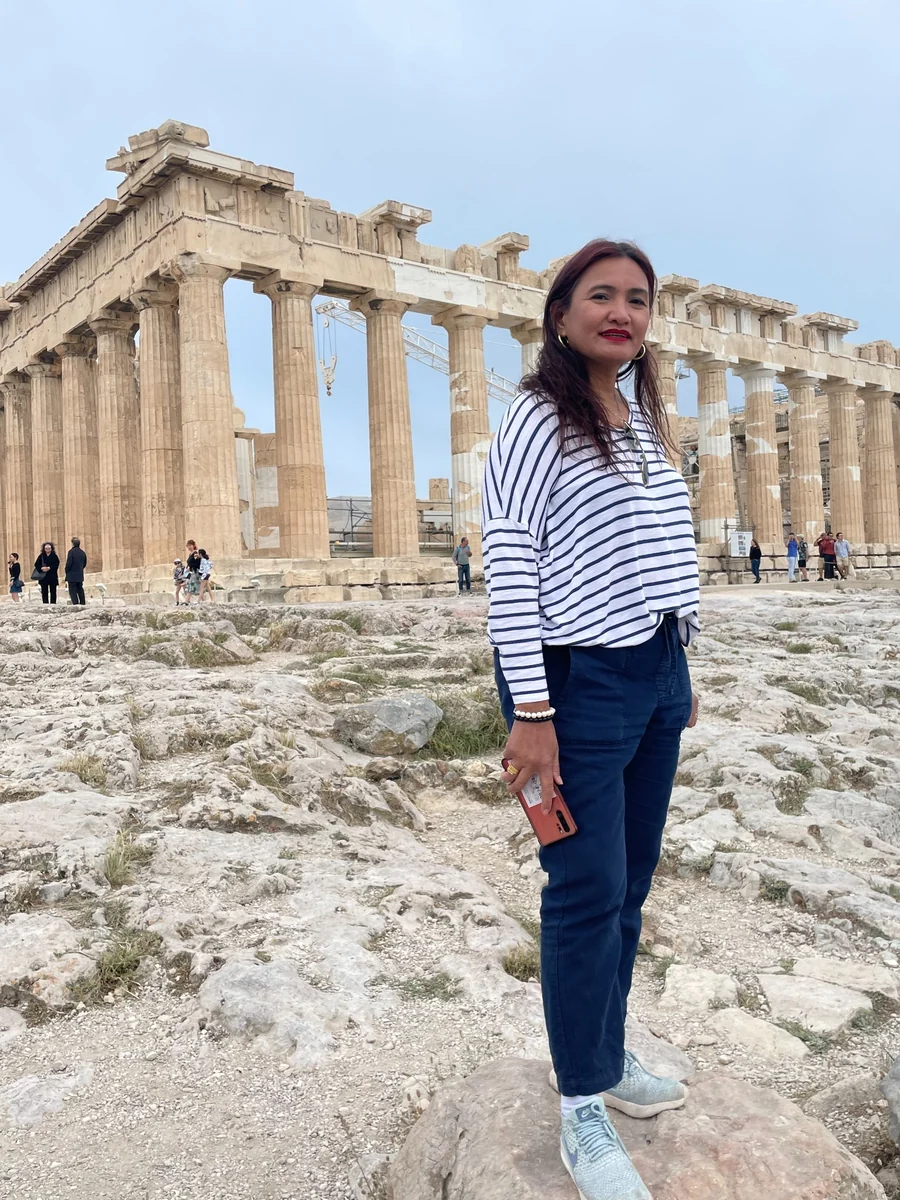
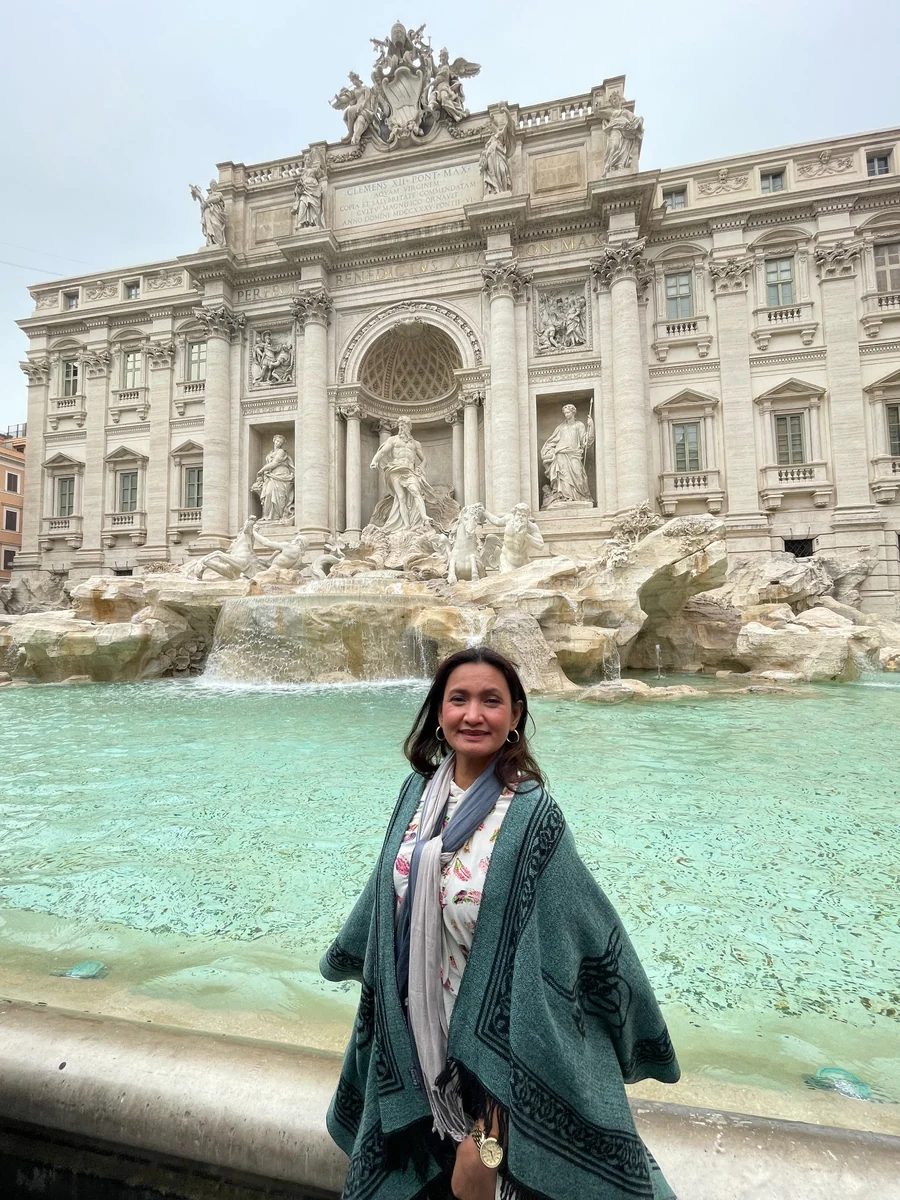
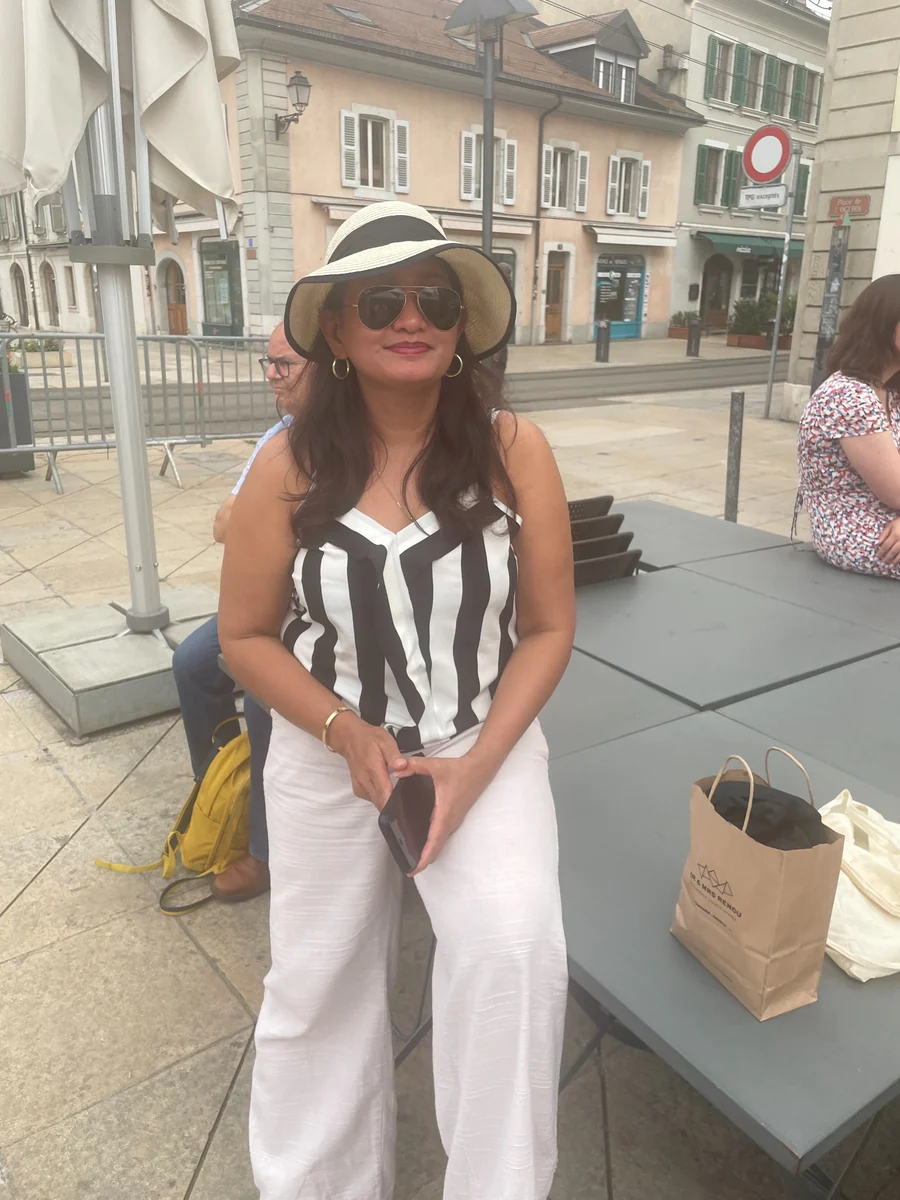
Reina’s family supplied the personal and travel photographs on this site. Her formal portrait comes from her professional biography materials.

The lantern painting and the nursing innovation infographic appear in Reina Mangubat’s 2025 Geneva thesis. The circular approach diagram appears in her September 2025 scoping-review manuscript. The Global Challenges Forum logo is from the Foundation’s official website.

The research page includes Dorothea Lange’s 1939 photograph of a nurse visiting a family in Farmersville, California. The Library of Congress holds the photograph.

Where Reina’s questions took shape
Teaching, caring for people with burns, and studying global health gave Reina three ways to ask what helps a person recover.
Two professions, one question
Clinical observation can reveal a wound. A learner, patient, or family member can describe what still stands in the way.