
Who needs a seat?
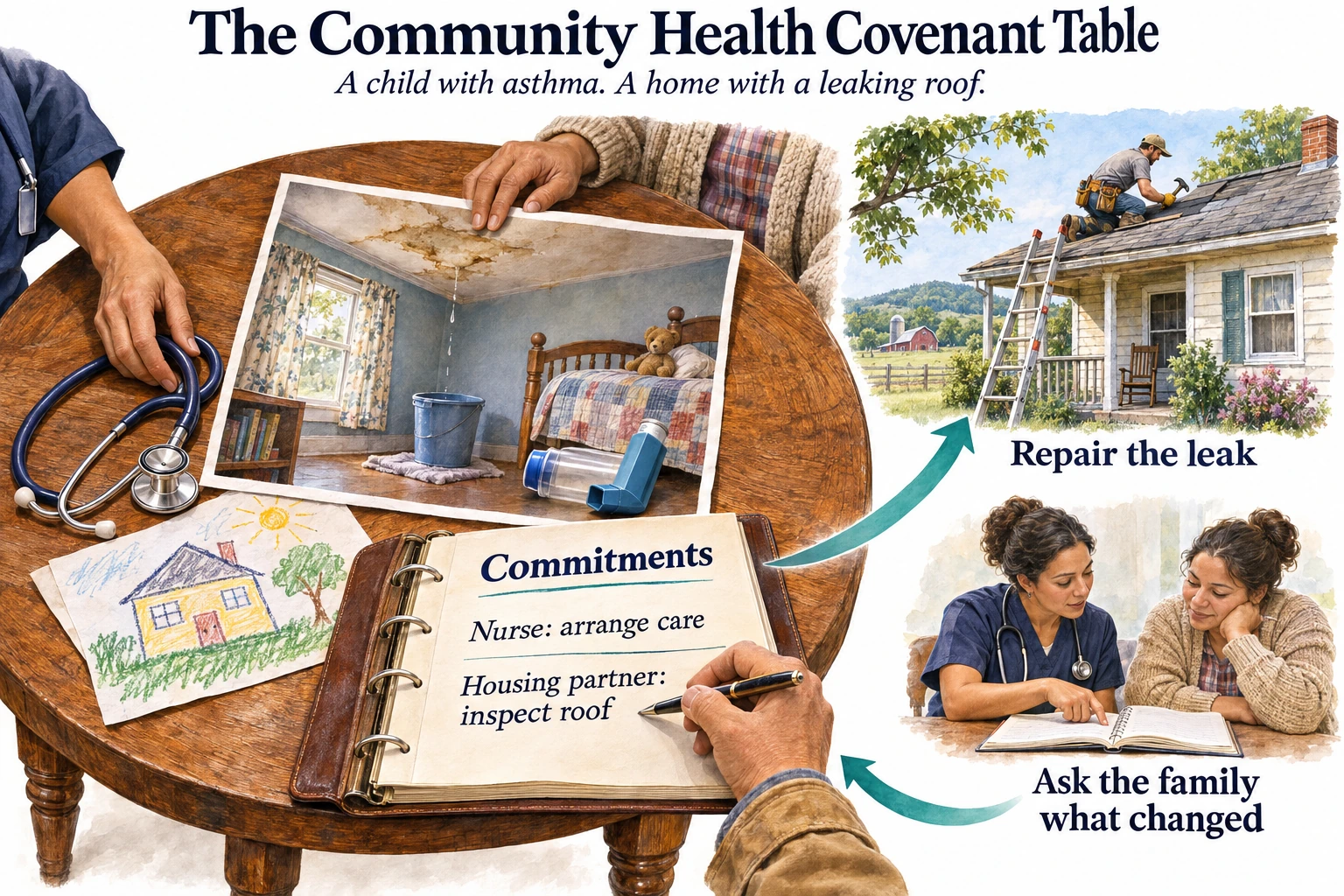
Imagine a child with asthma whose family rents a house with a leaking roof. A nurse can help the child get care. The family knows which bedroom gets wet. A housing partner can say who has authority to inspect the building or pay for a repair. All three know something the others need.
The nurse and a resident begin by listening to people who use the clinic and people who never get there. Invite a trusted community health worker and whoever holds the missing decision. That might be a school nurse with a private room, a behavioral health colleague, a physician available by telemedicine, or a housing worker with an inspection budget. Arrange interpretation, travel or paid participation where needed. Families decide what they share. Individual care stays between the patient and the clinical team.
What the first meeting produces
Ask residents to correct the nurse’s account before anyone proposes a solution. Write a one-page agreement naming the question, who is missing, what the group can decide and who keeps the record. Let participants confirm their convenor and choose someone other than the person leading the project to hear concerns.
Read each promise back to the person making it. In the asthma example, a housing partner might agree to offer an inspection, with the family’s permission, by an agreed date. Record who can authorize it, who will do it, the staff time available and who will respond if it falls through. Leave the repair open until someone with the authority and funds accepts it.
A first cycle in eight meetings
About ninety days gives a team time to try a small change and revise it. The dates below are a starting rhythm. The asthma and housing example is illustrative.
- Week 1 · Open the inquiry. Hear from families before settling on the question. Is the greatest difficulty getting a first assessment, getting the damp addressed, or both?
- Week 2 · Examine the evidence. Compare family accounts with what the clinic and housing service can establish. A waiting list can show delay. It misses families who never got on it.
- Week 3 · Form the partnership. Confirm people’s decision rights and contributions. Agree who will coordinate delivery, hold funds and records, and receive private objections.
- Week 4 · Choose a first action. Compare feasible options with current practice. The Transformation Lab is the small, authorized trial. The clinic might offer a private nursing assessment while a housing partner offers an inspection. Agree on funding, consent and who can pause the trial.
- Week 6 · Review the first attempt. Ask which families were reached and which still waited. If inspections happened but repairs stalled, trace where the decision stopped.
- Week 8 · Test the revision. Try the agreed correction. Invite a resident to lead the review and explain whose experience changed the plan.
- Week 10 · Apply the Transform Test. Examine outcomes, freedom of choice, the working relationships and the promises still owed. Give people who declined the offer a private way to be heard.
- Week 12 · Decide what follows. Continue, adapt, transfer, pause or close. Tell residents why, who will carry outstanding commitments and when they can check what lasted.
What counts as a result?
The Transform Test asks four questions. Reality: who got timely care or a completed repair, and what else might explain the change? Human Person: could families choose help, speak privately or decline and still receive care? Relationship: did a resident’s objection change a decision? Obligation: who kept a promise, who bore the cost, and who owes a remedy? Revisit the answers three to six months later when there is a continuing duty.
A U.S. study supports one part of this approach. In Seattle–King County’s Healthy Homes II trial, children offered community health worker home visits alongside clinic-based nurse education gained more symptom-free days than children offered nurse education alone. The study tested home outreach. Whether a local Covenant Table can improve access or get housing problems resolved is a question for each community to test. Read the Healthy Homes II study.
Eight ways to contribute
- Inquirers ask whose experience the clinic figures leave out.
- Conveners bring residents and decision holders together and make room for disagreement.
- Interpreters help families, clinicians and housing partners understand one another.
- Designers work with residents to shape more than one feasible response.
- Implementers deliver the nursing session, inspection or other action they accepted.
- Sustainers protect staff time, access and support after the first trial.
- Evaluators ask who benefited, who was missed and what should change.
- Multipliers help another resident or clinician learn to lead the next cycle.
People can share these contributions or take up a different one as the work changes. A parent can design the trial and later help judge it.
Four commitments that govern the work
- Reciprocal Freedom. A family can decline a home visit and still receive clinical care.
- Relational Sovereignty. Residents decide who enters their homes. Clinicians retain their professional responsibilities. Each partner commits only what it can authorize.
- Stewardship. Count the family’s lost wages and the community worker’s time alongside the clinic and repair budgets.
- Covenant of Mutual Obligation. Record who accepted each promise, when it is due, and who will put things right if it is broken.